
Teamsters Signal the Fight is Just Beginning
by Bryan Charles Vish
NEW YORK (Dec. 24, 2024) — The largest strike in Amazon’s history ended on Christmas Eve, but not without leaving its mark. Arrests, freezing picket lines, and corporate resistance underscored the workers’ battle for higher wages, safer conditions, and union recognition. The strike turned chaotic at the DBK4 facility in Queens as police arrested workers and union organizers. Despite the strike’s conclusion, the Teamsters warned: “Make no mistake, the Teamsters will never let up, and workers will never stop fighting for their rights at Amazon. Stay tuned.” The fight is far from over.

Jogernsyn Cardenas stopped his van to join the strike and was arrested. Photo by Luis Feliz Leon
Thousands of Amazon workers across seven facilities nationwide joined picket lines in what became a historic labor action. Spearheaded by the Teamsters, the strike centered on demands for livable wages, comprehensive benefits, and improved workplace safety. Amazon’s steadfast refusal to acknowledge the union or negotiate contracts highlights a growing divide between workers and one of the world’s largest corporations. With its vast workforce and economic power, Amazon’s resistance has made this strike a critical flashpoint in the resurgence of organized labor, setting the stage for a broader fight for workers’ rights.
A Historic Stand
The strike was triggered by Amazon’s failure to meet the December 15 deadline set by the Teamsters to begin contract negotiations. The union demanded that Amazon address the concerns of delivery drivers and warehouse workers, citing unsafe conditions, inadequate pay, and a lack of benefits. Central to the action was that delivery drivers are subcontracted through third-party companies despite wearing Amazon uniforms and operating branded vehicles, a point of contention in the legal battle over employment classification.
The National Labor Relations Board (NLRB) previously ruled that Amazon is a joint employer, bolstering the Teamsters’ argument for collective bargaining. However, Amazon has maintained its stance, stating that the drivers are not direct employees and, therefore, outside its purview. Kelly Nantel, an Amazon spokesperson, dismissed the strike as a “PR play” by “outsiders,” claiming the Teamsters have no real representation among Amazon’s workforce.
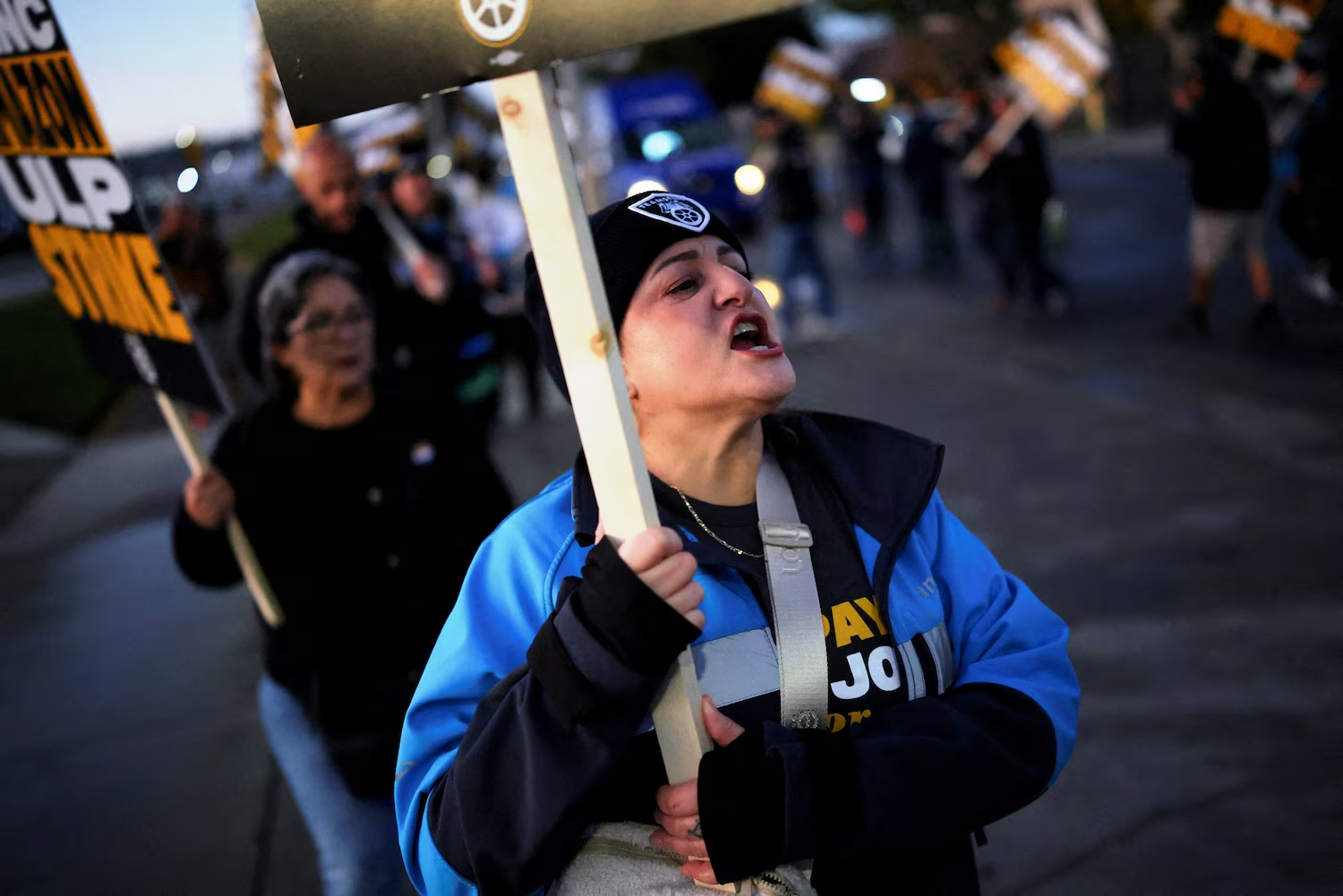
Striking workers picket outside of the Amazon DAX5 warehouse, Dec. 19, 2024, in City of Industry, Calif. Daniel Cole/Reuters
This conflict reflects Amazon’s broader strategy to resist unionization efforts, including its refusal to engage with unionized warehouse workers at the JFK8 facility in Staten Island, N.Y. The temporary strike underscored the growing tension between Amazon’s labor practices and the resurgent push for workers’ rights, setting a precedent for future confrontations.
Lessons from Past Struggles
The Amazon strike stands as a landmark moment in the modern labor movement, echoing the militancy of the 1920s and the collective strength displayed during the 1997 UPS strike. Like the strikes of a century ago, this action highlights workers’ demands for fair treatment amidst massive corporate profit-making. It also underscores the challenges of organizing in a gig-based, subcontracted workforce—a dynamic that mirrors broader trends in the U.S. labor market.
Amazon’s scale and visibility place it at the forefront of a national conversation about corporate responsibility and worker rights. The strike’s disruption, even if short-lived, demonstrates the potential for organized labor to challenge tech-driven business models that prioritize efficiency over worker welfare. Labor advocates see this as a rallying cry, potentially inspiring unionization efforts at Amazon and other sectors dominated by low-wage, high-demand conditions.
Public response has been mixed, with some consumers voicing support for the workers’ cause and others expressing concern over holiday delays. Politicians aligned with labor movements have lauded the effort and called for stronger protections for unionized workers. Senator Bernie Sanders stated:
“The shockingly dangerous working conditions at Amazon’s warehouses revealed in this 160-page report are beyond unacceptable. Making matters even worse: Amazon’s executives repeatedly chose to put profits ahead of the health and safety of its workers by ignoring recommendations that would substantially reduce injuries at its warehouses. This is precisely the type of outrageous corporate greed that the American people are sick and tired of.”
Though unresolved, the outcome of this strike may galvanize broader efforts to curb corporate union-busting tactics and secure lasting gains for labor nationwide.

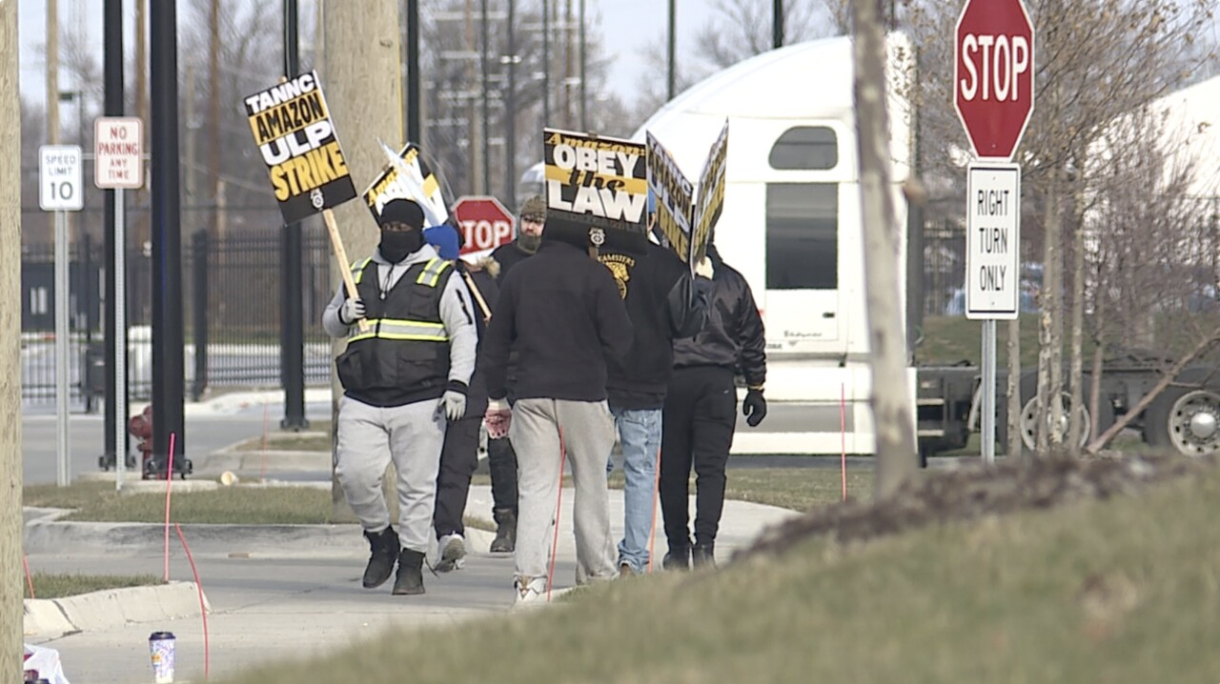
Amazon workers on strike at an Amazon facility.
The Fight Continues
The Teamsters have clarified that the recent strike is just the beginning. With their rallying cry to “stay tuned,” the union has signaled its intent to escalate the fight for better wages, benefits, and working conditions at Amazon. Future actions could involve more widespread strikes or targeted disruptions at additional facilities, leveraging the momentum gained from this historic effort. The union’s strategy may include legal challenges, public campaigns to pressure Amazon, and deeper organizing efforts within its subcontracted workforce.
The strike has already catalyzed solidarity among Amazon workers and has drawn significant attention to labor issues in tech-driven industries. Union leaders will likely build on this energy, coordinating with other labor groups and engaging more employees to expand their influence. As a result, the Teamsters’ fight against Amazon could become a cornerstone of the broader resurgence of organized labor in the U.S.
Catalyst for Change
The conclusion of the Amazon strike marks a pivotal moment in the fight for workers’ rights, showcasing the power of collective action against a corporate giant. While the strike has ended, its ripple effects continue reverberating, sparking renewed conversations about fair labor practices and corporate accountability. The Teamsters’ unwavering commitment and the workers’ resilience have set the stage for what could become a transformative chapter in the American labor movement. As attention shifts to the next steps, one thing is clear: this battle has reignited a spirit of solidarity that may reshape the future of work in the U.S. and beyond.
Eyes open. Voices loud.




Leave a Reply